Agencies end up doing CSV triage more often than most teams expect. A client says the import is broken, a destination platform such as HubSpot or Salesforce is blamed immediately, and someone has to figure out whether the real problem is the platform, the export, the delimiter, the headers, or one malformed row hiding halfway through the file. The fastest way to lose time is to escalate before you know which class of problem you are looking at.
That is why CSV triage should start with structure, not with support tickets. Converty's CSV Validator is useful because it lets an agency confirm how the file is actually being parsed before anyone sends a worried message to the client or the destination vendor. The goal is not to become the import system. The goal is to stop the import system from becoming the first place where the file gets properly inspected.
Most client CSV issues are boring, which makes them expensive
The frustrating thing about CSV problems is that they often look small enough to dismiss. A spreadsheet opens. The rows appear tidy. The column names look present. Yet the file still fails because the parser reads the delimiter differently, the first row is being treated as data instead of headers, or one quote mark changed the field shape farther down the file.
These are boring problems, but they are expensive because they send teams in the wrong direction. The client assumes the platform is unreliable. The implementer assumes the export is cursed. The support person assumes someone else already checked the file. By the time the issue becomes clear, several people have already spent time reacting to the wrong explanation.
That is why triage has to answer a narrower question first: what is this file actually doing under a parser?
The first triage pass should classify the problem, not solve every problem
When an agency receives a questionable CSV, the first goal is not a full remediation plan. The first goal is classification. Is the file failing because of the delimiter? Because of header assumptions? Because row shapes are inconsistent? Because quoted fields are swallowing separators? Because the destination expects a schema the export does not match?
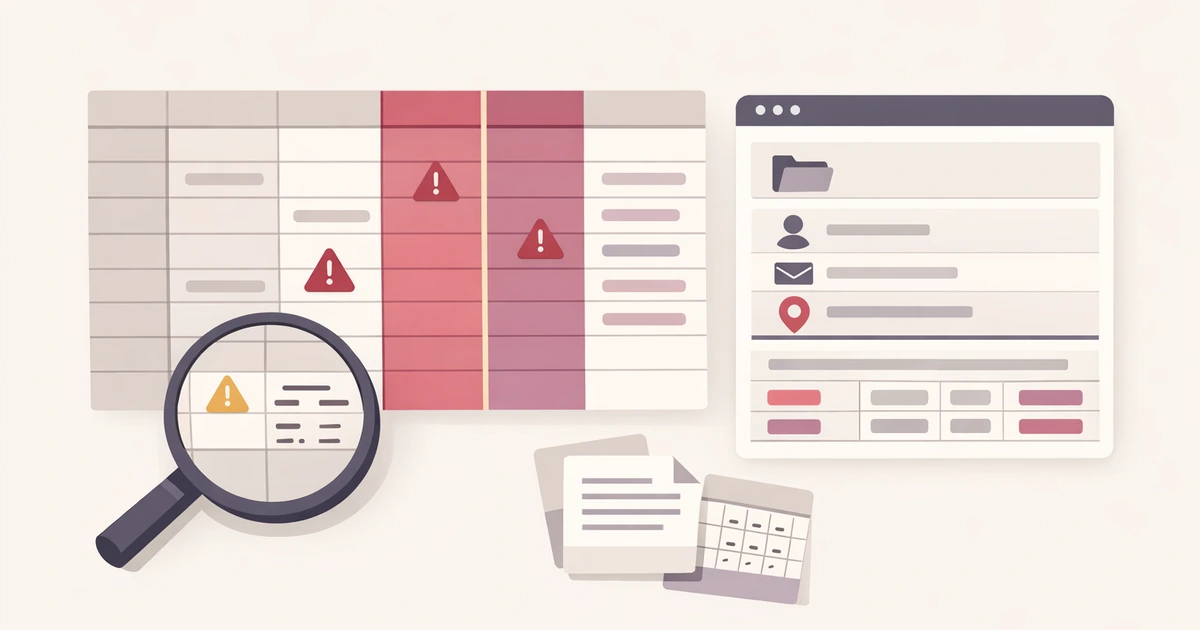
The CSV Validator is useful here because it shows delimiter detection, parsed preview, and issue reporting in one place. That changes the conversation quickly. Instead of saying "the import tool hates the file," you can say "the file is being parsed as one wide column," or "the first row is being treated as headers when it should be data," or "two rows have a different field count than the rest of the file." Once the problem has a class, escalation becomes more intelligent.
This is exactly why How to Fix CSV Delimiter Problems Before an Import and How to Validate CSV Files Before an Import Fails are the two most relevant base guides for agencies. One narrows the delimiter problem. The other covers the broader validation mindset.
A realistic agency workflow
Imagine a client sends a contacts export and says the CRM import failed. The file came from an older internal system. It opens in a spreadsheet, but some rows contain notes, some contain regional number formats, and the team is not even sure whether the separator is a comma or semicolon because the export crossed between locales before it reached the agency.
The wrong move is to upload the file repeatedly while guessing what the destination wants. The better move is:
- Open the file in CSV Validator or paste a representative sample.
- Confirm the detected delimiter instead of assuming it from visual inspection.
- Toggle header handling if the first row looks suspicious.
- Review the issues list for inconsistent row shapes, blanks, or duplicate headers.
- Read the parsed preview and compare it with the destination's expected column structure.
By the end of that pass, the agency may not have fixed the entire import, but it will know whether the next step is to repair the source file, ask the client for a cleaner export, or investigate the destination-side mapping.
The best agency triage removes the wrong escalations
Clients often want reassurance before they want diagnosis. The temptation is to escalate immediately because that feels responsive. In CSV work, early escalation is often the least helpful move because the simplest structure checks have not happened yet. Once the file has been classified, the agency can communicate more clearly.
That might sound like: the delimiter is wrong for the destination, the header row is not being interpreted correctly, two rows are malformed, or the export looks structurally fine and the problem probably is inside the destination mapping. Each of those conclusions is much more useful than "the import failed again." It creates a path forward for the client, the implementer, or the vendor without turning everyone into a speculative debugger.
If the next step does involve a platform, the agency can escalate with evidence rather than anxiety.
Row-level issues matter because they create false confidence
One of the reasons CSV problems are so annoying is that a file can look mostly correct while still containing a single row that breaks the import. That is especially common in agency work where the export has been opened and re-saved several times, or where a manual edit introduced one malformed line. A spreadsheet may hide the problem. The destination may report it vaguely. The parser preview reveals where the shape actually changes.
This is why agencies benefit from treating CSV triage as pre-escalation insurance. The aim is not perfection. The aim is to catch the obvious structural failures before they become somebody else's support burden.
If the client also has structured config or import-adjacent transformation issues outside CSV, How Developers Can Debug Config Snippets by Converting JSON, YAML, and TOML Side by Side covers the equivalent habit on the configuration side: inspect the structure before you automate or blame the downstream system.
Triage should end with a clearer next action
The best CSV review does not stop at "this file is bad." It identifies the next action that is proportionate to the issue. Sometimes that means fixing the delimiter. Sometimes it means asking the client for a re-export. Sometimes it means repairing a couple of malformed rows. Sometimes it means escalating to the platform with proof that the file structure is already sound.
That is why triage is worth doing even when the agency cannot solve the whole import in one sitting. It shortens the path to the right owner of the next step.
Validate before you escalate
CSV import problems feel urgent because the destination system is usually where the failure becomes visible. The most useful response is to move the diagnosis back toward the file itself.
Open the CSV Validator when the goal is to classify the issue before escalation, keep the FAQs nearby for the broader handling model, revisit How to Fix CSV Delimiter Problems Before an Import for delimiter-specific debugging, and use How to Validate CSV Files Before an Import Fails when the problem expands beyond separators into a wider import-readiness check.