Publishing a website update is rarely only about copy. The copy needs clean slugs. The Markdown needs a rendering check. Screenshots may need compression. Favicons and app icons need to match the current brand. Structured snippets and CSV exports may need one last validation pass before they are pasted into docs, examples, or import tools.
That is why a practical website publishing checklist should include the small cleanup work around the main page. Converty is useful in that final pass because the tools are narrow, browser-based, and focused on getting material into a cleaner shape before it reaches the live site.
Start with the text that becomes structure
Titles, labels, and headings often become more than visible copy. They become URL slugs, anchors, identifiers, campaign names, and file names. If those values are cleaned up late, they can drift across systems.
Before publishing, use the Case / Slug / Escape tool to turn final titles into predictable slugs and identifiers. If text needs to move into a URL, HTML field, or JSON string, use the escape outputs instead of hand-editing special characters.
For deeper naming guidance, read How to Convert Text to camelCase, snake_case, kebab-case, and PascalCase.
Preview Markdown before it leaves draft mode
Markdown can look fine in source and still render poorly. A heading can jump levels, a table can become hard to read, or an image can ship without useful alt text.
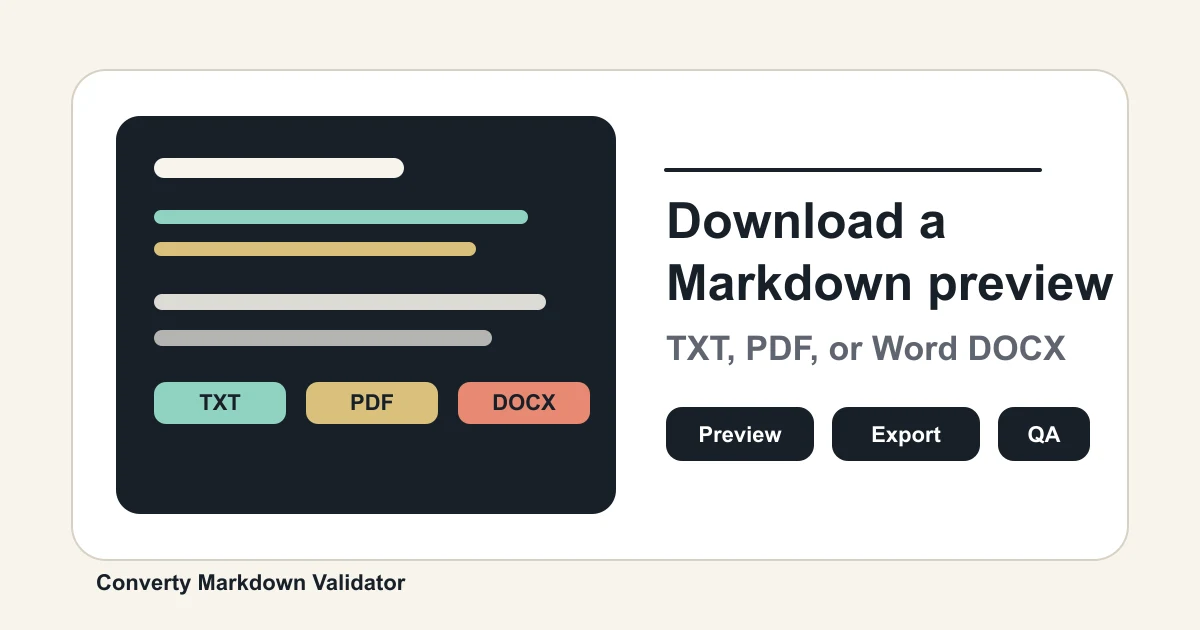
Use the Markdown Validator before committing docs, release notes, changelog entries, or CMS-ready Markdown. The goal is not to replace the final docs build or CMS preview. It is to catch the plain authoring issues before heavier systems and reviewers get involved.
For a focused pre-commit workflow, use How to Preview GitHub-Flavored Markdown Before You Commit It.
Prepare assets before the page is already live
Images and browser assets are easy to leave until the end. That is when teams discover that screenshots are heavy, the favicon package is incomplete, or the app icon still reflects an old mark.
Use the WebP Converter for small batches of website images and the Favicon / App Icon Generator for the common favicon, app icon, and manifest package. The work stays bounded: upload, review, export, and place the files in the project.
If favicons are the current bottleneck, read What Files Do You Need in a Favicon Package?.
Validate data before it becomes someone else's problem
Website publishing often includes data examples: JSON payloads, YAML snippets, CSV samples, or import templates. Those files should be readable and structurally valid before they are shared.
Use the JSON / YAML / TOML Converter to format or validate structured snippets. Use the CSV Validator to inspect headers, delimiters, and parsed rows before an import guide or support workflow depends on the file.
Open the relevant Converty tool when your publish checklist reaches the cleanup pass. The best time to fix small copy, data, and asset issues is before the page becomes the place where everyone discovers them.